It has been quietly outperforming the competition for decades. Here’s why it’s rated so highly by our team at Geelong and Surf Coast Skin, in collaboration with Geelong and Surfcoast Veins
It’s Made From Grain. Yes, Really.
Azelaic acid is a naturally occurring acid that is found in wheat, rye, and barley. Over decades of research, it was concentrated into a cream, gel, or foam formulation — and found to be remarkably effective at calming rosacea-prone skin.
No gimmicks. No complex routine required. It’s simply a well-researched ingredient that has been shown to consistently deliver results. A full overview of azelaic acid as a topical treatment can be found on DermNet NZ.
Why Rosacea Is Tricky to Treat
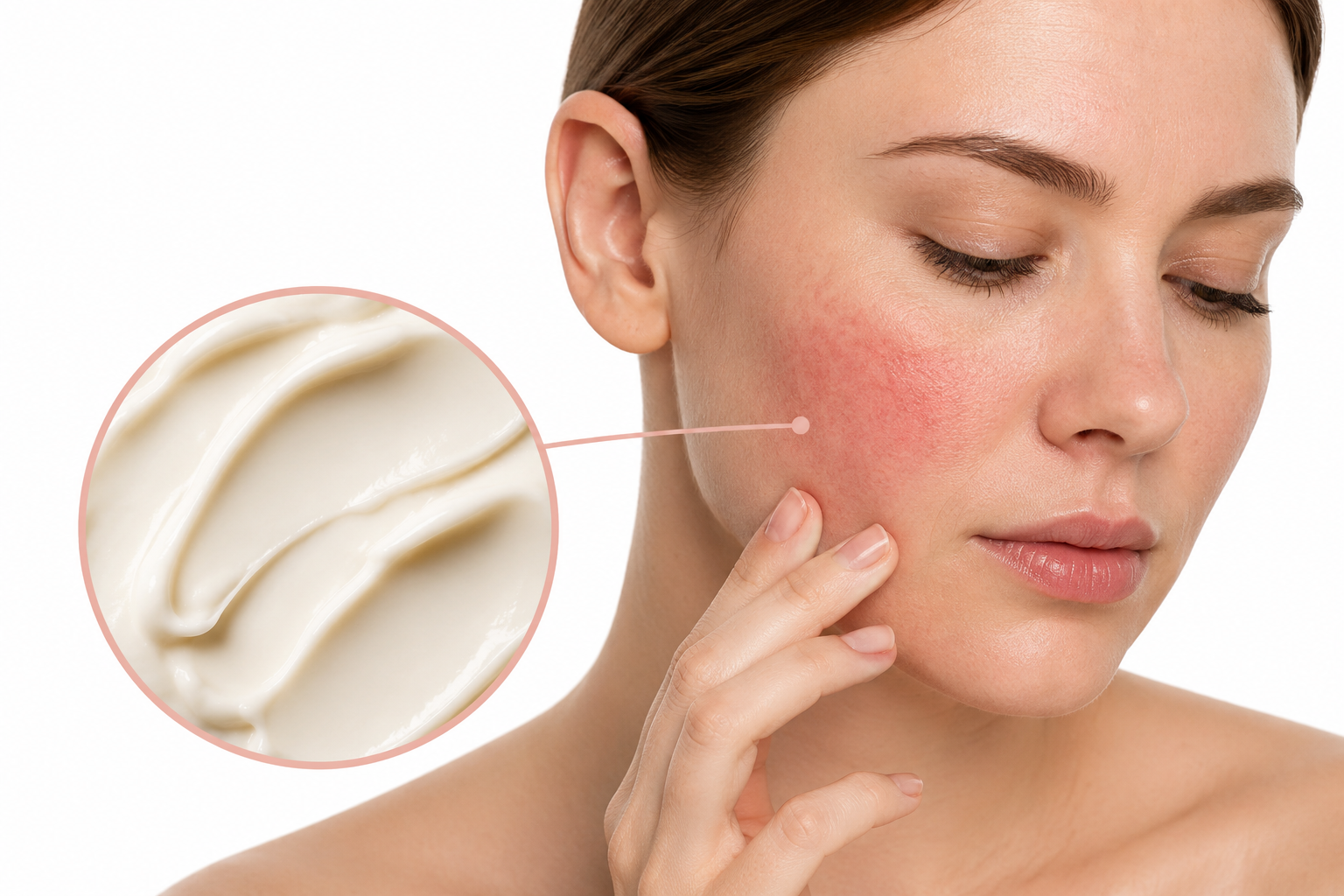
Rosacea isn’t just “a bit red.” It is a chronic skin condition driven by real inflammation beneath the surface — which is why it can’t simply be covered with makeup, and why so many products that claim to calm it are found to fall short.
What rosacea actually requires is something that works on its underlying causes: overactive inflammatory pathways, bacteria, and reactive skin cells that are all understood to contribute to persistent redness, bumps, and sensitivity. A detailed explanation of what rosacea involves at a skin level has been put together by DermNet NZ.
Here on the Surf Coast and in Geelong, rosacea is commonly seen to be triggered and aggravated year-round — by summer UV and heat, cold coastal winds in winter, and everything in between. At Geelong and Surfcoast Skin and Cosmetics rosacea is one of the conditions most frequently assessed and managed by our skin team.

What Azelaic Acid Does Differently
Most rosacea treatments are designed to target one thing. Azelaic acid has been shown to work across several simultaneously:
- Inflammation is dialled down at a cellular level — specifically along the pathways most commonly found to be overactive in rosacea-prone skin
- Papules and pustules are cleared through normalisation of the skin cells lining the pores
- Problem-causing bacteria are targeted to reduce the frequency and severity of breakouts
- Free radicals are neutralised, helping to reduce the ongoing redness and skin damage associated with rosacea over time
It isn’t the flashiest ingredient available. It just quietly does a lot.
What the Research Actually Shows
In a 2023 review of 20 clinical trials, azelaic acid was confirmed to significantly reduce redness, inflammatory lesions, and overall rosacea severity. When compared head-to-head against metronidazole — long considered the topical gold standard for rosacea — azelaic acid was found to perform better across multiple measures.
Nearly half of patients enrolled in clinical studies were found to report moderate to significant improvement at 12 weeks. In some cases, improvement was found to continue even after treatment had been stopped.
Further detail about how rosacea is managed at our clinic is available on our skin treatments page.
How It’s Used
In Australia, azelaic acid is available on prescription or over the counter
- A thin layer is applied to the whole face — morning and evening
- Early improvements are typically noticed from around week 4–6, with meaningful results seen by week 12
- Unlike retinoids or AHAs, photosensitivity is not increased — an important consideration for anyone spending time outdoors along the coast
Further reading on how azelaic acid is applied and what to expect from treatment has been made available by DermNet NZ.
Safety and Suitability
An excellent tolerability record has been established for azelaic acid over decades of use. A little mild tingling when treatment is first started is considered normal and is generally found to settle within a week or two.
It is also one of the very few prescription skincare actives considered safe during pregnancy — making it a valuable option when many other treatments are not appropriate.
For those with medium to deeper skin tones there is a small possibility of pigmentation changes and worth monitoring.
Is It Right for You?
Rosacea is experienced differently from person to person — and the most effective treatment plan is always one that has been tailored to your skin, your triggers, and your lifestyle.
If you are experiencing persistent facial redness, bumps, or reactive skin, an assessment with one of our doctors is recommended as a first step. A personalised approach to rosacea management is offered at Geelong and Surf Coast Skin, with treatments selected based on what is most likely to make a real and lasting difference for your skin.